Introduction
The Janome 2212 is a mechanical sewing machine designed for beginners, hobbyists, and home sewists who prefer straightforward controls over complicated electronic features. With 12 built-in stitches, adjustable stitch settings, and a practical free arm, it covers many everyday sewing tasks, including garment construction, alterations, and household repairs. Its uncomplicated design makes it an appealing option for people learning the basics of machine sewing.
Unlike computerized sewing machines with LCD screens and extensive stitch libraries, the Janome 2212 relies on manual dials and conventional mechanical operation. This simplicity can make learning easier while providing useful control over stitch length and width. In this review, we examine its features, sewing capabilities, limitations, and alternatives to help you decide whether it suits your projects and budget.
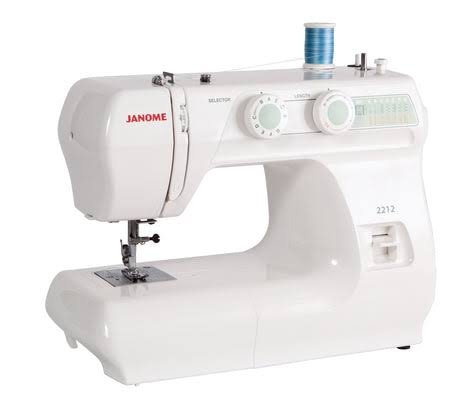
Janome 2212
A simple mechanical sewing machine for beginners
A user-friendly mechanical sewing machine with 12 built-in stitches, adjustable stitch length and width, and a four-step buttonhole function. It is well suited to beginners and home sewists working on everyday clothing, basic repairs, crafts, and simple quilting projects.
Who Is This Machine For?
The Janome 2212 is particularly suitable for people starting their sewing journey. Beginners can learn essential techniques such as threading, adjusting tension, selecting stitches, sewing straight seams, and finishing fabric edges without navigating digital menus. Its mechanical controls also make it useful for experienced sewists who want a straightforward secondary machine for routine repairs.
For everyday clothing projects, the machine offers the essential stitches needed to construct simple garments, shorten trousers, repair seams, and sew household accessories. The free arm is helpful when working on tubular items such as sleeves, trouser legs, and children’s clothing.
However, the Janome 2212 is not designed for every sewing requirement. Users who regularly work with thick upholstery, multiple layers of dense canvas, or substantial leather projects should consider a more specialized machine. Similarly, sewists who want numerous decorative stitches, automatic buttonholes, or computerized convenience may prefer a more advanced model.
Among sewing machines for beginners, the Janome 2212 stands out for its traditional controls and practical range of functions rather than for automation or extensive creative options.
Main Features
The Janome 2212 includes 12 built-in stitches selected using a mechanical dial. These provide the basic options needed for everyday sewing, including straight stitching, zigzag stitching, and other practical stitch patterns. Stitch length is adjustable up to 4 mm, while the maximum zigzag width is 5 mm. These adjustments allow users to adapt stitches to different fabrics and tasks.
The machine has a four-step buttonhole function. Rather than completing a buttonhole automatically in one operation, the user follows four stages, repositioning the stitch selector as instructed. This takes longer than a one-step buttonhole but is perfectly adequate for occasional garment sewing.
Another important feature is the front-loading, vertical oscillating-hook bobbin system. The bobbin sits in a removable case behind the front access panel. Correctly inserting the bobbin and guiding its thread through the tension spring are essential for consistent stitching. Unlike a transparent top-loading system, this arrangement does not make it as easy to check the remaining bobbin thread at a glance.
The Janome 2212 also includes a five-piece feed-dog system, which moves fabric beneath the presser foot, and snap-on presser feet for convenient changes between compatible accessories. The drop-feed function lowers the feed dogs, allowing the fabric to be moved manually for techniques such as free-motion darning or quilting.
Other practical features include a free arm, extra-high presser-foot lift, manual thread-tension control, and a push-pull bobbin winder. The machine has no built-in automatic needle threader or computerized display, so users perform these tasks manually.
Sewing Performance
For ordinary home sewing, the Janome 2212 offers a useful combination of adjustable settings and uncomplicated operation. Straight stitching is central to most sewing projects, from assembling garments to repairing seams and making cushions. The adjustable stitch length allows shorter stitches for detailed work and longer stitches for tasks such as basting, subject to the fabric and project requirements.
The zigzag function is useful for finishing raw edges, attaching elastic, and sewing certain stretch fabrics when paired with an appropriate needle and thread. Selecting the right stitch, needle size, thread, and tension is important for achieving a balanced result. For beginners, experimenting on fabric scraps before starting a project is a sensible way to identify suitable settings.
The front-loading bobbin requires a little practice, especially for users accustomed to modern drop-in systems. Thread tension must be set correctly, and the upper thread should be threaded with the presser foot raised when appropriate for the machine’s threading procedure. Incorrect threading can cause loose loops, skipped stitches, or thread bunching.
Because it uses mechanical dials, the Janome 2212 is relatively easy to understand and does not require users to learn electronic menus. Its main compromise is convenience: threading the needle, changing buttonhole stages, and adjusting settings all require manual attention.
For routine repairs, simple garments, crafts, and home projects, its feature set is practical. For prolonged professional use or demanding industrial materials, a specialized machine is a more suitable choice.
Quilting, Heavy Fabrics, and Leather Suitability
The Janome 2212 can be used for basic quilting projects, especially piecing quilting cotton and sewing smaller quilt components. Its adjustable stitch length helps users establish consistent seams, while the drop-feed function allows free-motion techniques when the appropriate presser foot and accessories are available. However, the standard work area is more restrictive than the extended tables found on some quilting-focused machines, making large quilts harder to maneuver.
For denim, the machine may handle ordinary repairs and a limited number of layers when the fabric, needle, and settings are appropriate. Use a suitable denim needle, sew slowly through bulky seams, and avoid forcing the fabric under the presser foot. Multiple thick layers can exceed the practical capabilities of a domestic beginner machine, so it should not be treated as a dedicated heavy-duty model.
The same caution applies to sewing machines for leather work. The Janome 2212 may manage certain very thin leather or leather-like materials in suitable conditions, but it is not designed for regular leatherworking. Leather can be difficult to feed consistently, and needle holes are permanent. For frequent leather projects, thick hides, bags, or multiple heavy layers, consider a machine specifically designed for leather or an appropriate heavy-duty model.
6. Pros and Cons
Pros
- Simple mechanical controls that are approachable for beginners.
- Twelve useful built-in stitches for everyday sewing.
- Adjustable stitch length up to 4 mm and zigzag width up to 5 mm.
- Free arm for sleeves, trouser legs, and other tubular items.
- Drop-feed function for compatible free-motion sewing techniques.
- Snap-on presser feet for practical accessory changes.
- Suitable for basic repairs, garments, crafts, and introductory quilting.
Cons
- No automatic needle threader or computerized display.
- Four-step buttonhole takes more time than a one-step system.
- Front-loading bobbin is less convenient for users who prefer top-loading designs.
- Limited stitch variety compared with many computerized models.
- Not intended for regular thick-leather sewing or demanding heavy-duty work.
- The compact work area can be restrictive for large quilting projects.
Overall, the Janome 2212 prioritizes straightforward operation over advanced features. Whether it represents good value depends on its current price, included accessories, warranty, and the type of sewing you intend to do.
Specifications
The following specifications describe the Janome 2212’s principal features. Check the manufacturer’s documentation for the exact accessories and warranty applicable to your market.
- Machine type: Mechanical domestic sewing machine
- Built-in stitches: 12
- Buttonhole: Four-step
- Maximum stitch length: 4 mm
- Maximum stitch width: 5 mm
- Bobbin system: Front-loading vertical oscillating hook
- Feed system: Five-piece feed dog
- Stitch selection: Mechanical dial
- Thread tension: Manual adjustment
- Presser feet: Snap-on type
- Free arm: Yes
- Drop feed: Yes
- Needle threader: Manual
- Bobbin winding: Push-pull system
Comparison With Alternatives
The Brother XM2701 is worth considering if convenience and stitch variety are priorities. It offers 27 built-in stitches, an automatic needle threader, a top-loading bobbin, and a one-step buttonhole. These features can make setup easier for beginners, although the best choice depends on your preferred controls and sewing requirements.
The Janome HD3000 is a more suitable alternative for users who expect to sew heavier everyday fabrics more frequently. It provides a sturdier, more feature-rich mechanical design, including a hard cover and additional practical functions. It costs more than a basic starter machine, so occasional sewists may not need the upgrade.
The Janome 2212 remains a sensible choice for people who want a simple mechanical machine without paying for features they may rarely use. The Brother XM2701 offers more convenience, while the Janome HD3000 is worth examining for heavier projects. Compare current prices and specifications before deciding.
Frequently Asked Questions
Is the Janome 2212 a good sewing machine for beginners?
Yes. Its mechanical dials, practical stitch selection, and straightforward operation make it suitable for learning fundamental sewing techniques. Beginners should be prepared to thread the needle manually and learn the four-step buttonhole process.
Can the Janome 2212 sew denim?
It can handle some denim projects, such as simple hems and repairs, depending on fabric thickness and the number of layers. Use a suitable denim needle and avoid forcing thick seams through the machine. For frequent heavy-denim work, compare more robust alternatives.
Is it suitable for quilting?
Yes, for basic quilting and piecing, particularly with quilting cotton. The drop-feed function can support free-motion work with the appropriate accessories, but the machine lacks the spacious working area and specialized conveniences found on dedicated quilting models.
Can it sew leather?
The Janome 2212 is not a dedicated leather machine. Very thin leather-like materials may be possible in limited circumstances, but regular leatherwork, thick hides, and layered leather projects call for a more appropriate machine.
Is the Janome 2212 better than the Brother XM2701?
Neither is automatically better for everyone. The Janome 2212 appeals to users who prefer traditional mechanical controls, while the Brother XM2701 provides more stitches and convenience features, including automatic needle threading and a one-step buttonhole.
Should I buy the Janome 2212?
Consider it if you need a straightforward machine for learning, clothing repairs, basic garments, and small craft projects. If your priorities are extensive decorative stitching, frequent heavy-fabric sewing, or leatherworking, compare more specialized models before purchasing.