Leather Sewing Machines
A sewing machine for leather requires certain technical specifications. Unlike ordinary woven fabrics, leather does not recover from needle holes, and its thickness can make feeding and stitching more difficult. Therefore, a suitable machine should provide consistent fabric movement, adequate piercing power, and compatibility with the correct needles, thread, and presser feet.
Whether you plan to make wallets, bags, leather garments, or household accessories, the best choice depends on the type of leather and the complexity of your projects. For example, a machine suitable for thin leather and occasional repairs may struggle with thick hides, multiple layers, or bulky seams.
In this guide, we introduce models worth comparing, like the SINGER Heavy Duty 4423, Brother ST150HDH, Janome HD3000, JUKI TL-2000Qi, and JUKI HZL-DX7. However, rather than focusing on every individual feature, we explain what matters most when selecting a sewing machine for leather. You can then follow the links to our detailed reviews for model-specific information.
Our selection
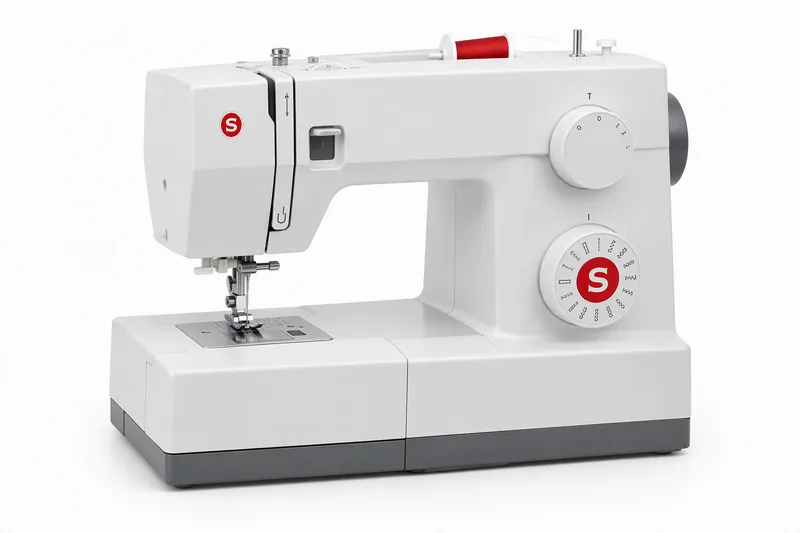
SINGER Heavy Duty 4423 — Powerful Heavy-Duty Mechanical Machine
Best for: Home sewers looking for a sturdy machine for denim, canvas, multiple layers, and lighter leather projects
Key features: 23 built-in stitches, heavy-duty metal frame, stainless-steel bed plate, adjustable presser-foot pressure, built-in needle threader, one-step buttonhole, top drop-in bobbin, free arm, and sewing speeds up to 1,100 stitches per minute.
Pros: Strong motor, sturdy construction, good performance on heavier fabrics, adjustable presser-foot pressure, easy-to-use mechanical controls, and useful features such as the automatic needle threader and one-step buttonhole.
Cons: Limited stitch selection compared with computerized machines, relatively high maximum speed can take some practice to control, and it is not designed to replace a true industrial machine for very thick leather or continuous heavy-duty work.
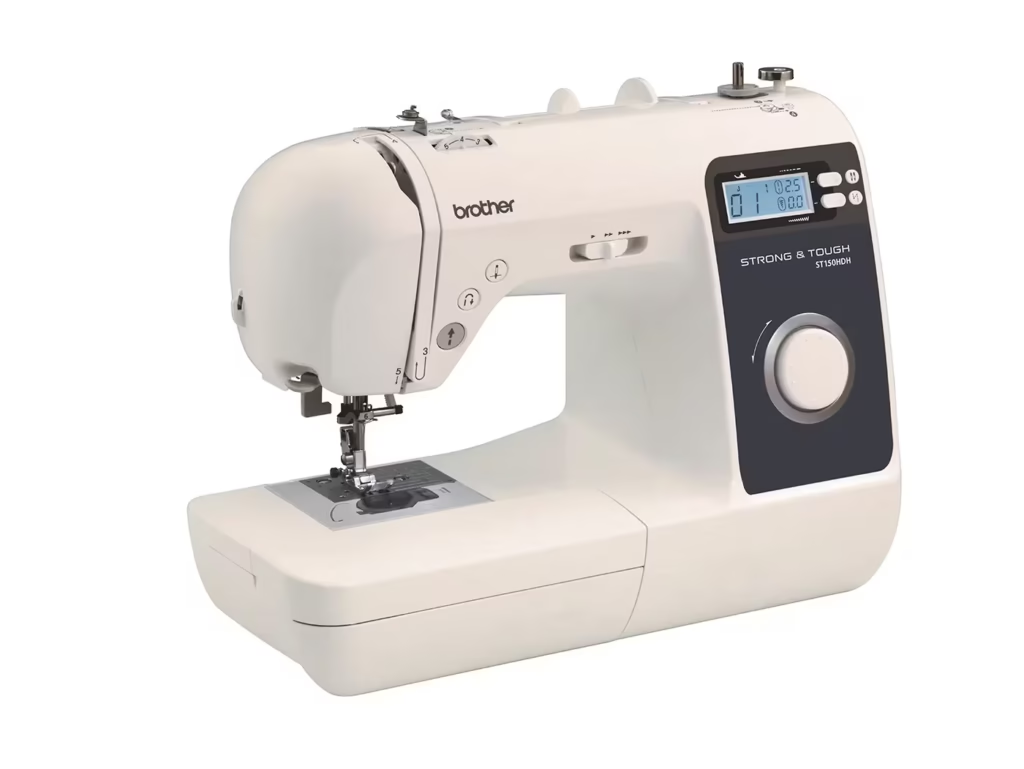
Brother ST150HDH Strong & Tough — Versatile Heavy-Duty Sewing Machine
Best for: Home sewers who want a sturdy machine for denim, canvas, multiple layers, and occasional leather projects
Key features: 50 built-in stitches, heavy-duty metal frame, automatic needle threader, one-step buttonhole, adjustable sewing speed, drop feed, free arm, and a large extension table for bigger projects.
Pros: Sturdy construction, versatile stitch selection, adjustable speed control, easy-to-use computerized controls, good fabric-feeding performance, and useful features for both everyday sewing and heavier materials.
Cons: Not intended for very thick leather or continuous industrial-level work, the computerized controls may not appeal to users who prefer simple mechanical machines, and its large selection of functions can take some time to learn.
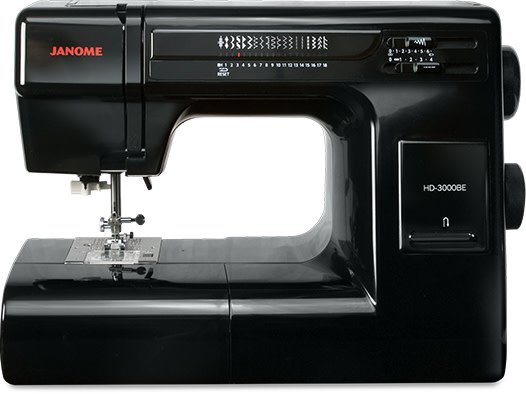
Janome HD3000 — Reliable Machine for Heavy Fabrics
Best for: Home sewers who need a dependable mechanical machine for denim, canvas, garments, repairs, and occasional leather projects
Key features: 18 built-in stitches, an aluminum body, automatic needle threader, a one-step buttonhole, with adjustable presser-foot pressure, free arm, and extra-high presser-foot lift.
Pros: Durable construction, straightforward controls, strong fabric-feeding performance, useful presser-foot adjustment, and a simple design that makes everyday sewing easy to manage.
Cons: Fewer stitch options than computerized models, no built-in speed control, and not the best choice for very thick leather or heavy industrial sewing.
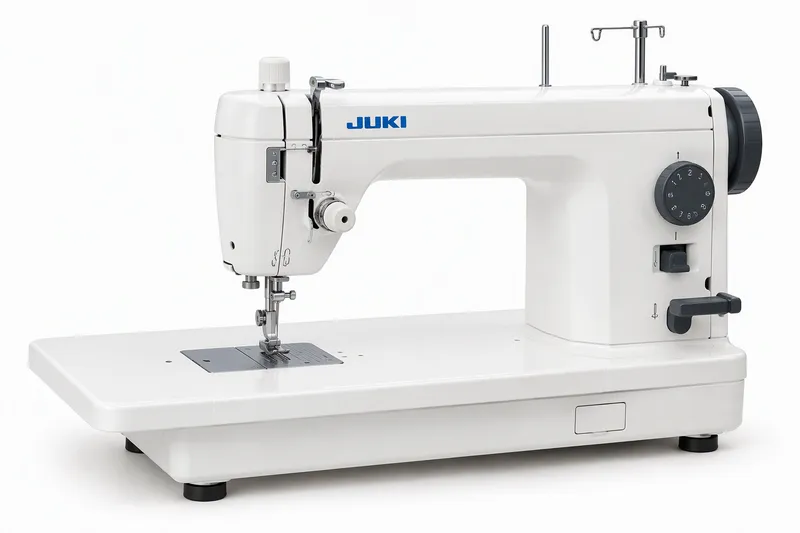
UKI TL-2000Qi — High-Performance Straight-Stitch Machine
Best for: Experienced home sewers who want a powerful machine for leather accessories, bags, quilting, and heavier fabrics
Key features: Industrial-style aluminum construction, straight-stitch operation, automatic needle threader, adjustable presser-foot pressure, speed control, large work area, and high maximum sewing speed.
Pros: Excellent stability, powerful fabric feeding, precise straight stitching, adjustable speed control, and a large workspace that is useful for bags and larger projects.
Cons: Straight-stitch only, fewer functions than a general-purpose sewing machine, more expensive than basic heavy-duty models, and not a replacement for a dedicated industrial leather machine when working with very thick leather.
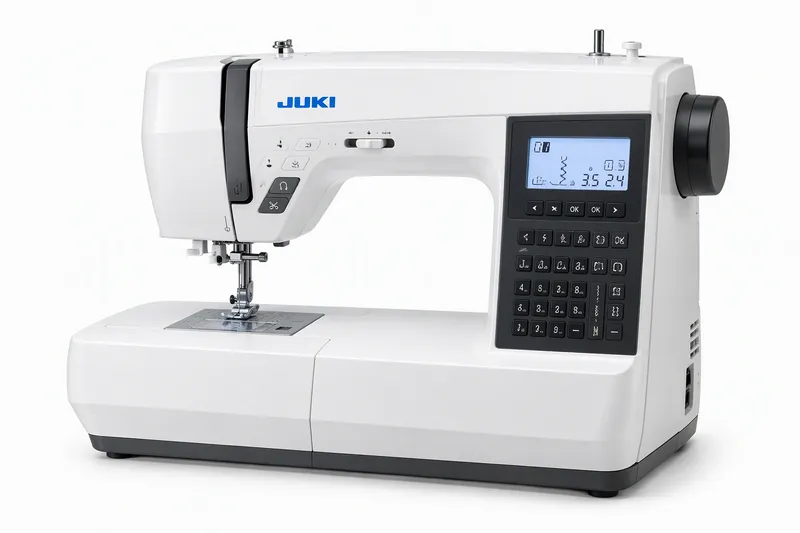
JUKI HZL-DX7 — Advanced Computerized Sewing Machine
Best for: Experienced home sewers who want a versatile machine for garments, bags, quilting, and lighter leather projects
Key features: Computerized controls, large LCD screen, automatic needle threader, adjustable sewing speed, start/stop button, knee-lift lever, and a strong feeding system.
Pros: Precise fabric feeding, excellent speed control, convenient computerized functions, sturdy construction, and versatile performance across a wide range of home sewing projects.
Cons: Higher price than basic mechanical machines, more complicated than entry-level models, and it is not designed for very thick leather or continuous industrial leather work.
What Makes a Good Sewing Machine for Leather?
Not every domestic sewing machine is designed to handle leather. Consequently, before comparing prices or stitch counts, consider the machine’s motor, feeding system, needle compatibility, and presser-foot clearance. These factors have a direct effect on stitch consistency and the materials you can realistically sew.
1. Motor Power and Frame Construction
Leather can offer considerable resistance when a needle passes through it, especially at thick seams. Therefore, a machine with adequate motor power and a stable frame is important when working with heavier materials.
A rigid construction can reduce unwanted movement during sewing. In addition, suitable internal components and a well-designed drive system help maintain consistent operation under load. Nevertheless, a heavy metal frame or a high maximum sewing speed does not automatically guarantee that a machine can sew thick leather.
Always check the manufacturer’s material recommendations. For frequent work with thick leather, belts, upholstery, or multiple heavy layers, a dedicated industrial leather-sewing machine may be more appropriate than a domestic heavy-duty model.
2. Feeding System and Presser Foot
The feeding system is particularly important because leather behaves differently from many ordinary fabrics. Its surface may stick to a standard presser foot, while multiple layers can shift relative to each other.
A walking foot helps move the upper and lower layers together. Similarly, roller or non-stick presser feet can improve feeding on certain leather surfaces. However, compatibility varies between machines, so check which accessories are available for the model you are considering.
Presser-foot clearance also matters because thick materials and folded seams need sufficient space beneath the foot. Furthermore, adjustable presser-foot pressure can help when working with different materials, although it cannot compensate for insufficient machine capacity.
3. Sewing Machine Needles and Thread
Choosing the correct sewing machine needles is essential for leatherwork. Unlike universal needles, leather needles have a cutting point designed to penetrate leather. The needle size must match the material thickness and thread weight, while the thread itself must be appropriate for the intended product.
For example, a small needle may struggle to penetrate thicker leather, whereas an excessively large needle can leave unnecessarily prominent holes. Therefore, test different suitable combinations on scraps before beginning your finished project.
Stitch length also deserves attention. Because leather retains needle holes, very short stitches can create a perforated line that weakens the material. A longer stitch may be more appropriate for some leather projects, but the ideal setting depends on the leather thickness, seam design, and manufacturer’s guidance.
4. Workspace, Speed Control, and Stitch Quality
The machine’s working area becomes increasingly important when sewing bags, large panels, or upholstery components. A larger throat space allows bulky material to pass more easily around the needle, while a stable work surface helps support its weight.
Speed control is another useful feature, particularly for beginners. Although high maximum speed can improve productivity, controlled, slower stitching is often preferable when navigating corners or sewing close to an edge.
In addition, examine stitch consistency, reverse stitching, thread tension adjustment, and the availability of compatible sewing machine parts. These features help with setup, maintenance, and achieving reliable results. Remember, however, that a machine with many decorative stitches is not necessarily better for leather than one with fewer stitches but more suitable feeding and construction.
Five Sewing Machines to Consider
The following models offer different approaches to home sewing. Their suitability for leather depends on the material, seam thickness, accessories, and intended frequency of use.
1. SINGER Heavy Duty 4423
The SINGER Heavy Duty 4423 is a mechanical domestic sewing machine designed for everyday sewing and heavier fabrics. It may be worth considering for selected light leather projects, provided the material is compatible with the machine. It is not a dedicated industrial leather machine.
Best for: Home sewists who want a straightforward machine for ordinary sewing and occasional heavier materials.
Read our full SINGER Heavy Duty 4423 review for specifications, performance, and limitations.
2. Brother ST150HDH
The Brother ST150HDH combines computerized controls with a heavy-duty domestic design. Its included accessories and feeding options make it worth investigating for projects involving multiple fabric layers. Nevertheless, check the manufacturer’s recommendations before using it for leather.
Best for: Users who want computerized convenience for general sewing and selected heavier projects.
Explore our detailed Brother ST150HDH review for more information.
3. Janome HD3000
The Janome HD3000 is a mechanical model designed for durability and practical home sewing. Its straightforward operation may appeal to users who prefer traditional controls, although its suitability for leather depends on thickness and seam construction.
Best for: Sewists who prefer mechanical controls and a versatile domestic machine.
Read our complete Janome HD3000 review to examine its features and limitations.
4. JUKI TL-2000Qi
The JUKI TL-2000Qi focuses on straight stitching and provides a larger work area than many basic domestic machines. This design can be useful for larger projects, but straight-stitch performance alone does not establish suitability for thick leather.
Best for: Sewists who prioritize straight-stitch projects and workspace.
Visit our JUKI TL-2000Qi review for a closer look at its capabilities.
5. JUKI HZL-DX7
The JUKI HZL-DX7 is a computerized sewing machine offering a broad range of functions for garment construction and other home projects. However, its extensive features do not automatically make it a specialist leather machine. Check compatibility with your chosen material and accessories before buying it for leatherwork.
Best for: Users who want computerized versatility across a variety of sewing projects.
Read our full JUKI HZL-DX7 review for further details.
How to Choose the Right Sewing Machine for Leather
First, identify the products you want to make. Thin leather accessories require different capabilities from thick belts, heavy bags, or upholstery. Next, check the machine’s recommended material range, feeding system, presser-foot clearance, needle compatibility, and available accessories.
Also consider your experience level. A sewing machine for beginners should be straightforward to thread and operate, with controls that allow you to practise safely and consistently. However, ease of use should not take priority over material compatibility.
If you also need a sewing machine for quilting, look for suitable workspace and feeding features, since handling large fabric layers requires different considerations from sewing leather. Likewise, check the availability of replacement needles, presser feet, and other sewing machine parts before purchasing.
Finally, test the machine on scrap material from the same leather whenever possible. Because needle holes cannot be removed, careful preparation is especially important. If you regularly sew thick leather or work in professional production, consider a purpose-built industrial machine rather than relying on the heavy-duty label alone.
Explore Our Sewing Machine Reviews
The five models featured here provide a starting point for comparing domestic sewing machines, but their capabilities differ. Therefore, use this overview to understand the technical requirements first, then follow the links to our detailed reviews for individual specifications, practical limitations, and alternatives.
We will also add links to new sewing machine reviews as our collection expands. This will help you compare more models and identify the machine that best matches your materials, projects, and budget.
Frequently Asked Questions About Sewing Machines for Leather
Can a regular sewing machine sew leather?
Yes, some regular sewing machines can sew thin, soft leather for small crafts, accessories, and simple repairs. However, not every sewing machine is designed to handle this material. Leather creates more resistance than ordinary fabric, so a strong motor, a stable frame, suitable presser feet, and the correct needle are important. For thicker leather or frequent projects, a dedicated leather sewing machine may be a better choice.
What type of needle should I use for leather?
A leather needle is generally the best choice because its cutting point is designed to penetrate leather more effectively than a standard sewing machine needle. However, the needle size must also match the leather thickness and thread. Using an unsuitable needle can cause skipped stitches, damaged material, or poor stitch quality. Therefore, always check your sewing machine manual before choosing needles.
Do I need a heavy-duty sewing machine for leather?
A heavy-duty sewing machine can be useful when working with thin leather, denim, canvas, and other resistant materials. Nevertheless, the term “heavy-duty” does not guarantee that a machine can sew thick leather. Before buying, check the manufacturer’s material recommendations, feeding system, presser-foot clearance, and compatible needle and thread sizes.
Is a walking-foot sewing machine better for leather?
A walking-foot sewing machine can be particularly helpful because its feeding mechanism moves multiple layers more evenly. As a result, it reduces the risk of layers shifting while sewing. This feature is valuable for bags, upholstery, and thicker leather projects. However, a walking foot alone does not determine a machine’s capability; motor power, construction, and the full feeding system also matter.
What stitch length is best for sewing leather?
A slightly longer stitch is often preferable because closely spaced needle holes can weaken leather and create a perforated line. The ideal stitch length depends on the material thickness, project, and thread. For this reason, test your settings on a scrap piece of similar leather before sewing the final item. Remember that leather holes are permanent, so careful preparation is especially important.
Can beginners use a sewing machine for leather?
Yes, beginners can start with small projects made from thin, manageable leather. However, it is important to learn how to control sewing speed, select the correct needle, and guide the material without pulling it. A machine with adjustable speed and straightforward controls can make the process easier. For thick leather, multiple layers, or professional work, a more specialized machine may be necessary.
What should I consider before buying a sewing machine for leather?
First, identify the type and thickness of leather you intend to sew. Then, compare motor performance, frame stability, feeding mechanism, presser-foot clearance, stitch-length adjustment, and compatibility with leather needles and heavier thread. In addition, consider spare parts, maintenance, and the availability of suitable accessories. By matching these specifications to your projects, you can choose a sewing machine that offers reliable performance without paying for features you do not need.