
A well-maintained sewing machine can provide years of reliable service, but regular cleaning and simple maintenance are essential. Dust, lint, loose threads, and fabric fibers can build up inside the machine and affect its performance. Fortunately, many basic maintenance tasks are easy to do at home.
Clean Your Sewing Machine Regularly
One of the simplest ways to keep your machine working properly is to clean it regularly. Before cleaning, switch off and unplug the machine for safety.
Remove the needle, presser foot, bobbin, and bobbin case if your machine allows it. Use a small soft brush to gently remove lint and loose fibers around the feed dogs, bobbin area, and needle plate.
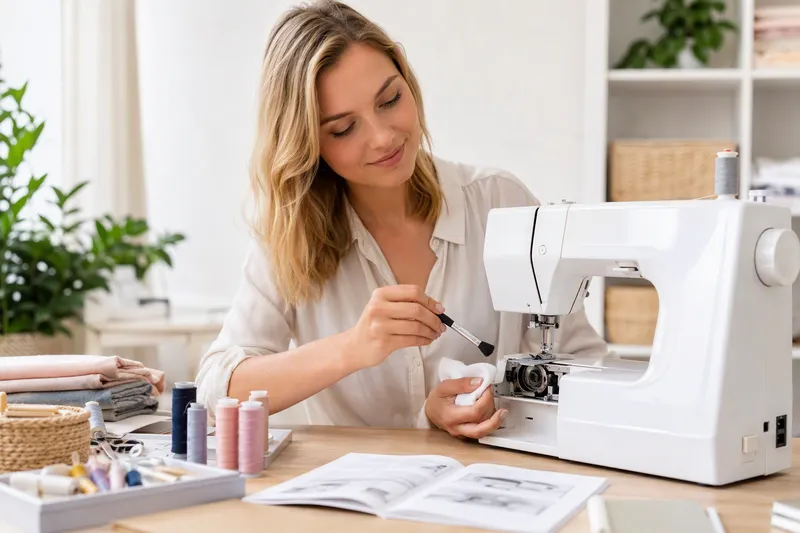
Avoid using compressed air to blow lint deeper into the machine. Instead, carefully brush or vacuum accessible areas using an appropriate small attachment.
How often you should clean your machine depends on how frequently you sew. If you sew regularly or work with fabrics that produce a lot of lint, more frequent cleaning may be necessary.
Check the Sewing Machine Parts
Regularly inspect important sewing machine parts for signs of wear or damage. Check the needle, presser foot, bobbin, bobbin case, needle plate, and feed dogs.
A damaged or bent needle should be replaced immediately. Using a worn needle can cause skipped stitches, fabric damage, or even break the thread.
It’s also a good idea to replace needles regularly rather than waiting until they break. The correct needle type and size depend on the fabric and thread you are using.
Use Sewing Machine Oil Correctly
Some mechanical sewing machines require occasional lubrication with sewing machine oil. However, not every modern machine should be oiled by the user.
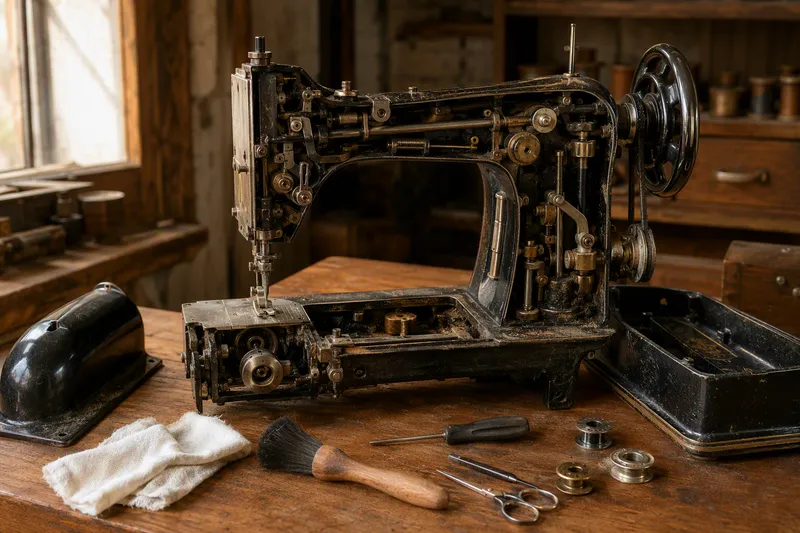
Always check your manufacturer’s instructions before applying oil. Your sewing machine manual should indicate which areas require lubrication and what type of oil is recommended.
Never use cooking oil, general-purpose household oil, or other unsuitable lubricants. Applying oil to the wrong location can attract dust and potentially damage the machine.
After oiling, sew on a piece of scrap fabric to make sure excess oil does not stain your project.
Troubleshooting Common Problems
If your sewing machine isn’t working correctly, start with the simplest possible causes. Check that the machine is threaded correctly and that the bobbin has been inserted in the proper direction.
If the thread keeps breaking, check the needle, thread quality, threading path, and tension setting. A bent or incorrectly installed needle can also cause problems.
Skipped stitches may indicate that the needle is damaged or unsuitable for the fabric. Replace it with the correct needle and test the machine again.
If the fabric isn’t feeding properly, clean the feed-dog area and check whether the presser foot is positioned correctly.
When to Consider Sewing Machine Repair
Not every problem can be solved with cleaning or adjustments. If you notice unusual noises, grinding, electrical problems, timing issues, or persistent stitching problems, professional sewing machine repair may be necessary.
Avoid taking apart complicated internal mechanisms unless you have the appropriate knowledge and instructions. A qualified technician can diagnose problems and replace worn components safely.
Summary: develop a Simple Maintenance Routine
Good maintenance doesn’t have to take much time. Clean the lint from your machine after sewing, replace worn needles, keep the machine covered when it isn’t being used, and store it in a clean, dry environment.
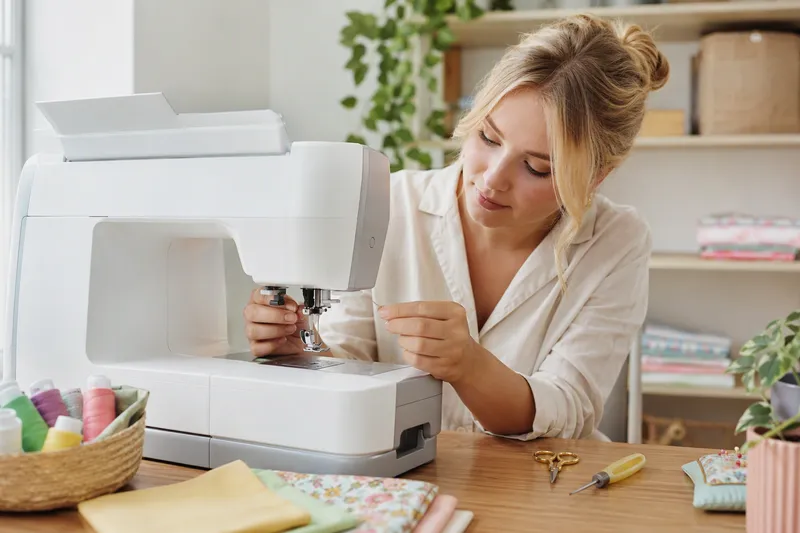
Following these simple habits can help your sewing machine run smoothly, reduce unnecessary repairs, and extend the useful life of its components. Most importantly, always follow the manufacturer’s maintenance recommendations for your particular machine.